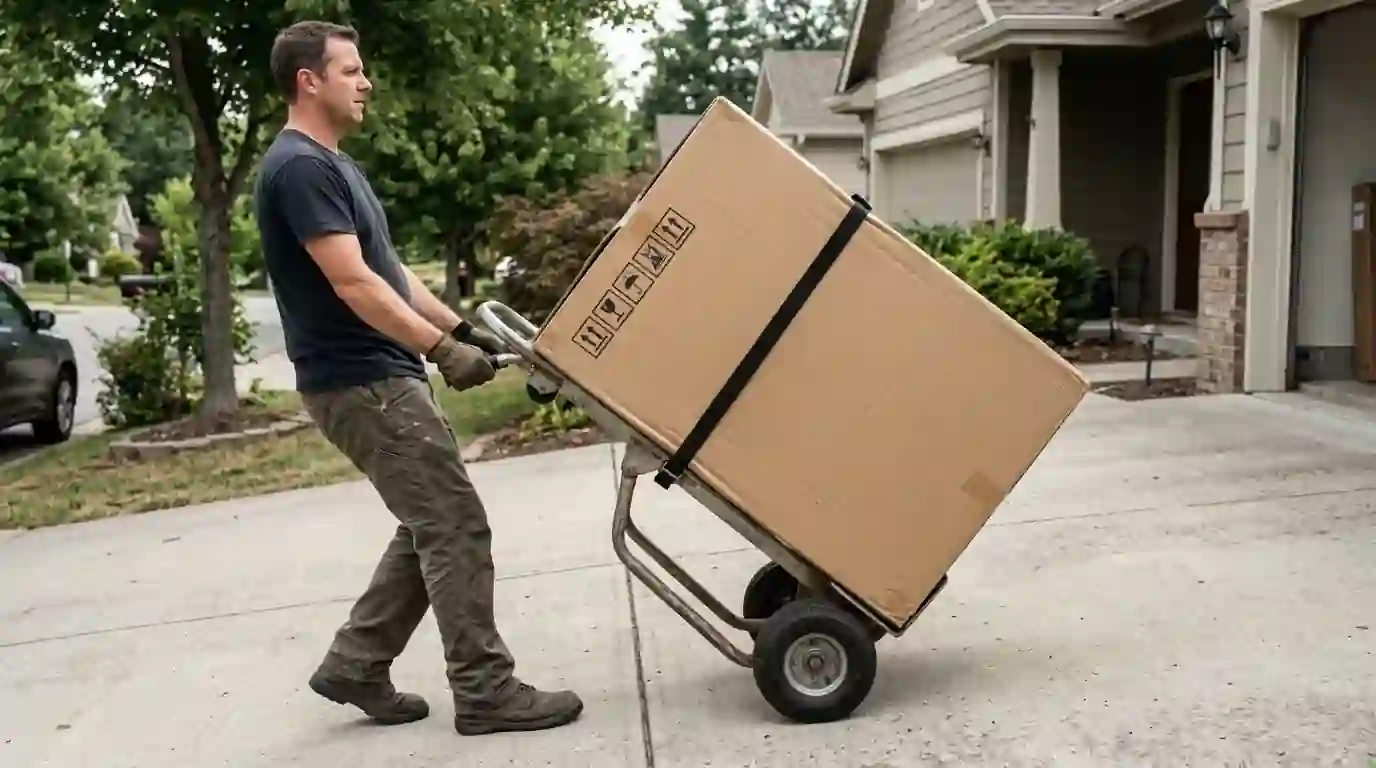
Stop the water first: close the supply valve behind the appliance or the main shutoff for the home. Then cut the power by unplugging the appliance or switching off its breaker, as long as you can do so without standing in water. Soak up the water, pull damp items away, dry the floor with fans and look for where the leak starts before calling for repair.
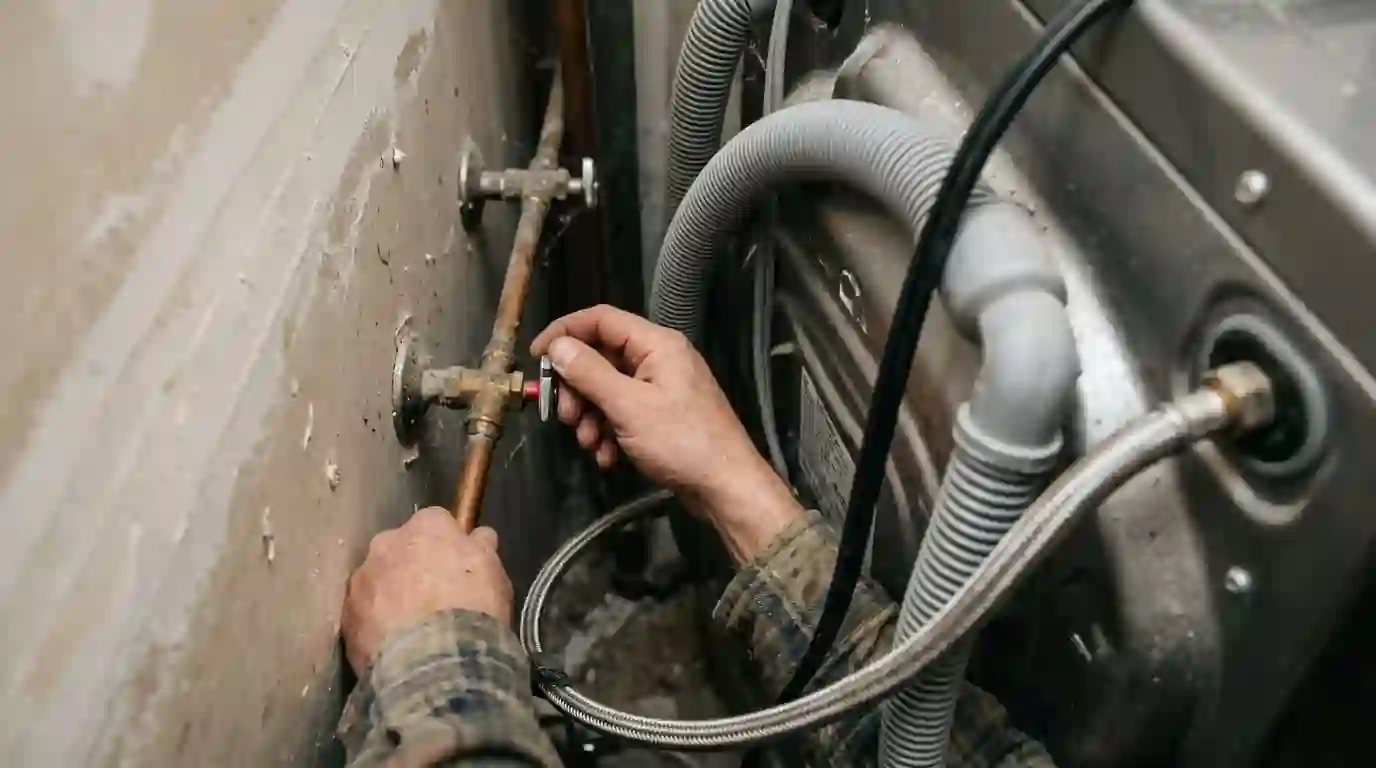
Stop the water at the closest shutoff valve
The first job is to stop more water from arriving. Most washers, dishwashers and refrigerators with ice makers have a small shutoff valve on the line that feeds them. Washer valves are usually on the wall behind the machine. Dishwasher valves are usually under the kitchen sink, and refrigerator water valves are under the sink, behind the unit or in a nearby cabinet.
If you cannot find the appliance valve, or it will not turn, close the main water shutoff for the home. In many Valley houses it sits near the front of the house where the line enters, or in the garage. In condos and apartments, the shutoff may be in a utility closet, so it helps to locate it before you ever need it.
Cut the power without standing in water
Water and electricity do not mix, so the next step is to cut power to the leaking appliance. If the plug is easy to reach from a dry spot, unplug it. If not, switch off the breaker for that appliance at the electrical panel.
Do not step into standing water to reach an outlet or plug. If water has reached outlets, cords or a power strip, turn off the breaker first and keep everyone away from the wet area. If you are not sure which breaker controls the appliance, turning off the main breaker is the safer choice while you deal with the water.
Protect hardwood, laminate and the ceiling below
Standing water soaks into hardwood seams and laminate edges quickly, so remove it right away. Use towels, a mop or a wet vacuum to pull up as much water as you can. Move rugs, boxes and furniture away from the wet area, and prop up anything that has to stay with blocks or foil.
In two-story homes and in apartments and condos, check the ceiling below the leak for stains or drips. Many units in North Hollywood, Van Nuys and Sherman Oaks have a neighbor directly beneath them, so let the building manager or the downstairs neighbor know if water may have traveled. Water can run along joists and show up some distance from the appliance itself.
- Lay towels along the edge of the water to stop it spreading
- Use a wet vacuum to lift water out of floor seams
- Move rugs, furniture and stored items off the wet floor
- Run fans and open windows to dry the area
- Take photos of the damage before you clean up fully
Where common appliance leaks usually start
Knowing the usual leak points helps you describe the problem on the phone. A washer that leaks during fill often has a loose hose or a cracked inlet valve, while a leak during drain often points to the drain pump, the drain hose or a torn front-load door boot. A dishwasher leak commonly comes from the door gasket, the inlet valve, a loose drain hose clamp or a cracked tub.
A refrigerator puddle is usually water, not refrigerant. It often comes from a clogged defrost drain that overflows inside the cabinet, a cracked water line or filter housing, or a leaking ice maker inlet valve. Hard Valley water can make valves drip as scale builds, and old plastic water lines tend to crack over time.
- Washer: supply hoses, inlet valve, drain pump, door boot
- Dishwasher: door gasket, inlet valve, drain hose clamp, pump seal
- Refrigerator: defrost drain, water line, filter housing, inlet valve
- Water heater: relief valve line or tank, which needs a plumber
Replace old rubber washer hoses before they burst
Plain rubber washing machine hoses are one of the most common causes of sudden, heavy leaks. They age and soften behind the machine where nobody looks, then split under full water pressure. A burst hose can release water continuously until someone shuts the valve.
Many households replace rubber hoses with braided stainless steel hoses as a simple precaution. Check the hoses every so often for bulges, cracks or rust at the fittings. Turning off the washer valves when you leave home for long trips is another easy habit that limits the risk.
Drying out the area and watching for mold
Once the leak is stopped and the standing water is gone, dry the area completely. Run fans, open windows and keep air moving for a day or two. Pull the appliance out if you can do so safely, since water often hides underneath and behind it.
Watch for warped boards, soft spots, musty odors or stains over the next few days. These can mean water reached the subfloor or the wall cavity. Larger leaks, or water that sat for hours, may need a water damage professional to dry the structure properly and check for mold.
Getting the leaking appliance repaired
Leave the water and power off until the appliance has been checked. Running it again to see where the water comes from can make the damage worse. Note when the leak happened, such as during fill, wash, drain or while the appliance was idle, since that narrows down the failed part.
Our technician traces the leak to its source, replaces the failed valve, hose, seal or pump and runs a full test to confirm the appliance stays dry. You get the price before any work begins. We answer around the clock, so call us whenever a leak happens and we will give you an arrival window on the call.
Key takeaways
- Close the appliance valve or the main water shutoff first
- Cut the power from a dry spot or at the breaker
- Pull up standing water fast to protect floors and ceilings below
- Leave the appliance off until the leak source is fixed