Hard water carries dissolved calcium and magnesium that leave scale when water heats or evaporates. In Los Angeles homes that scale builds in dishwasher spray arms and heaters, ice maker valves, washer inlet screens and refrigerator water filters. Change fridge filters on schedule, clean inlet screens once a year, run dishwasher cleaner monthly and use a rinse aid. Those habits slow the buildup a great deal.
What hard water actually does inside an appliance
Hard water is water with a higher load of dissolved minerals, mostly calcium and magnesium. You cannot see the minerals in a glass, but you see them as white spots on dishes and crust on a showerhead. Inside an appliance the same minerals settle wherever water heats up, sits still or dries out.
That scale narrows small openings and coats heating surfaces. A valve that used to snap shut may start to drip, and a heater wrapped in scale has to work harder to warm the water. The damage is slow, which is why it is easy to miss until a part fails.
Dishwasher scale: spray arms, filters and heating elements
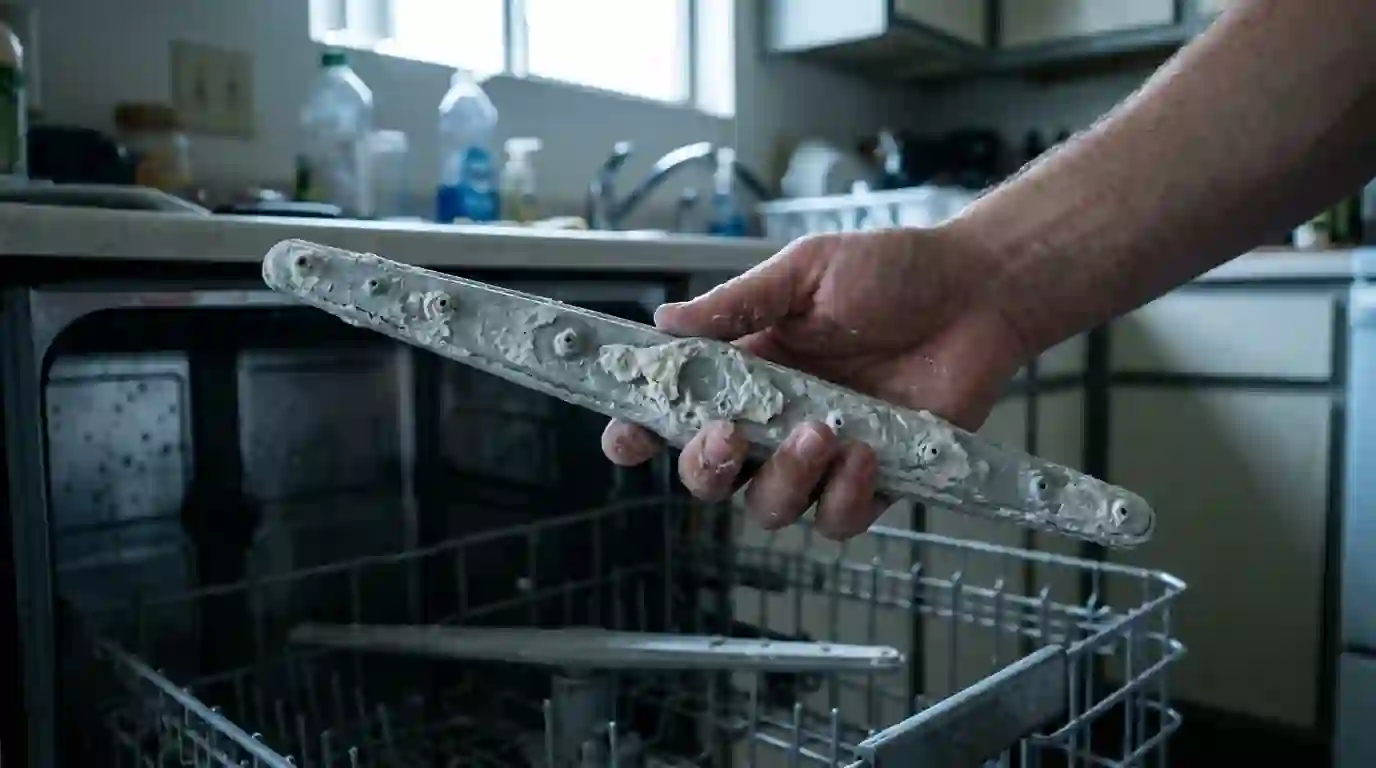
The dishwasher takes more hard water abuse than any other appliance in the kitchen. Each cycle heats water and then lets it dry on the tub, racks and spray arms. Over months, the tiny holes in the spray arms clog with mineral crust, so water stops reaching parts of the racks.
The heating element or inline heater picks up a scale coat too, and the drain filter collects loose flakes. Glasses come out cloudy, the tub looks chalky and dishes stay gritty. In bad cases the inlet valve screen clogs, and the machine fills slowly or shows a fill error.
- Cloudy glassware even with fresh detergent
- White crust around the door gasket and tub floor
- Spray arm holes partly blocked with mineral grit
- Slow fill or an inlet error code on newer models
Ice makers and refrigerator water valves under hard water
A refrigerator's water inlet valve has small passages and a fine screen that catch minerals over time. When scale builds there, the valve may fill slowly, fill unevenly or drip after it closes. A dripping valve can freeze the fill tube shut, which stops ice production entirely.
Ice made from hard water can also look cloudy and leave white flakes in drinks. The water filter catches some minerals and sediment, but only while it still has capacity. An overdue filter adds restriction and stops helping the valve downstream. Many slow ice makers we see in Van Nuys and North Hollywood apartments trace back to an old filter and a scaled valve.
Washer inlet screens and hoses collect mineral grit
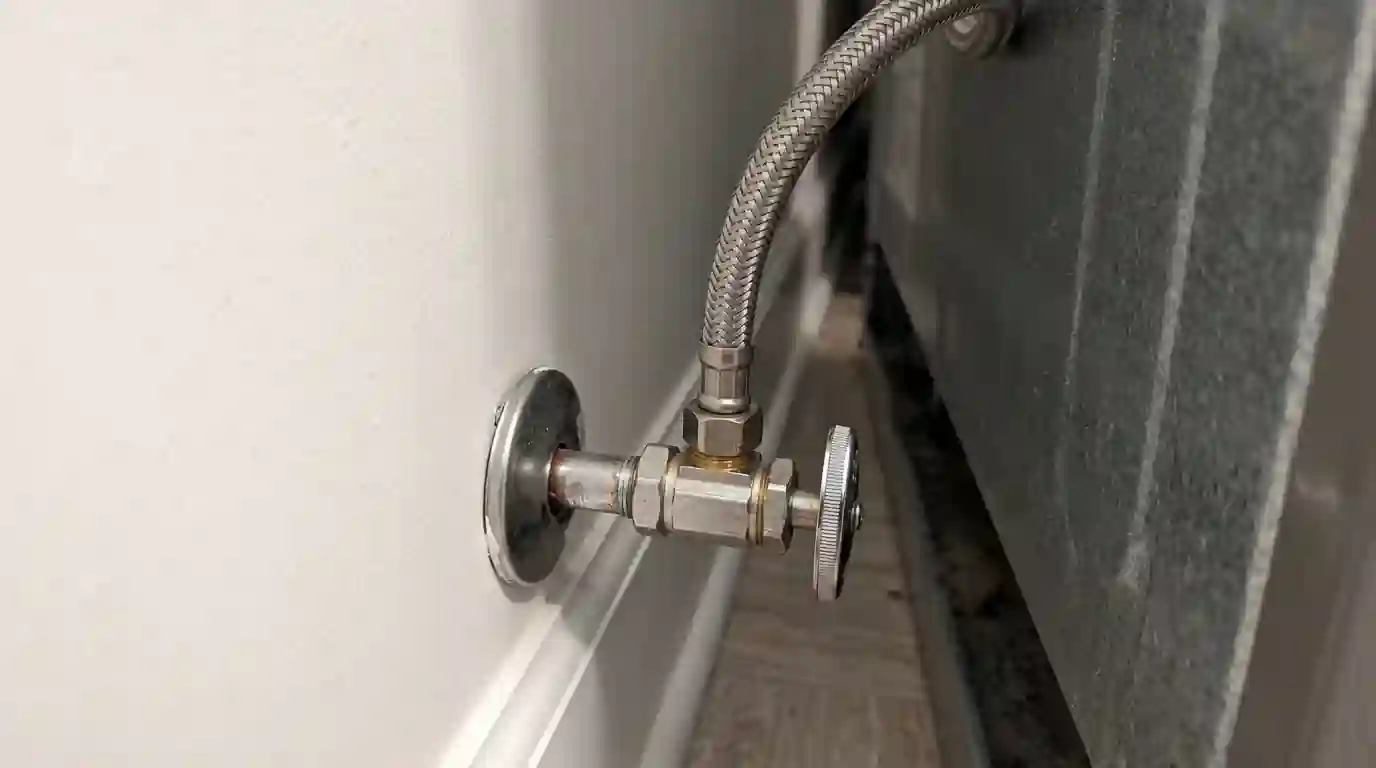
Every washer has small mesh screens where the hot and cold hoses connect to the machine. Those screens catch sediment and mineral flakes from the supply line. When they clog, the washer fills slowly, runs long cycles or throws a fill error. Front-load washers are especially sensitive because they use less water and time the fill closely.
Hard water also leaves residue in the detergent dispenser and around the door boot on front-loaders. That residue holds moisture, which can lead to musty odors and mold. Cleaning the dispenser and wiping the door boot keeps both problems down. Using the right amount of high-efficiency detergent also helps, since extra soap combines with minerals and adds to the film.
Simple habits that slow hard water damage at home
You do not need special equipment to protect your appliances from hard water. A few routine habits handle most of the buildup, and they cost very little. Shut off the water supply before you remove any hose or screen.
If you notice drips, slow fills or white crust despite these habits, the scale has likely reached a valve or heater. At that stage, cleaning the outside of the part does little for the inside. That is the point to have the part tested rather than keep cleaning around it.
- Replace the refrigerator water filter on the schedule in the manual
- Run a dishwasher cleaner or a cup of white vinegar monthly
- Keep the dishwasher rinse aid dispenser filled
- Clean washer inlet screens once a year with the water shut off
- Wipe the front-load door boot and leave the door open to dry
- Rinse the dishwasher drain filter every week or two
Do water softeners and filters solve the hard water problem
A whole-home water softener removes much of the hardness before water reaches any appliance. It reduces scale in dishwashers, washers and water heaters noticeably. It is a bigger project, though, and it needs salt and occasional service. It also is not right for every home or every plumbing setup, so it is worth getting advice from a plumber before you decide.
Point-of-use options help in smaller ways. The refrigerator's own filter, an inline filter on the ice maker line and a dishwasher rinse aid all reduce the effect on one appliance each. For most Valley households, good habits and on-time filter changes go a long way without a full softening system.
When a hard water symptom has become a repair
Scale eventually causes real failures. A refrigerator inlet valve that drips or will not open, a dishwasher heater that no longer warms the water and a washer inlet valve that sticks are common examples. Cleaning does not fix a valve whose internal seat is worn or coated.
Our technician tests the valve, the heater and the flow before replacing anything, and you get the price before work begins. We also point out other spots where scale is building so you can stay ahead of it. If hard water is slowing down one of your appliances, call us and we will take a look.
Key takeaways
- Valley tap water leaves scale wherever water heats or dries
- Dishwashers, ice makers and washer screens take the most damage
- Fridge filters, rinse aid and yearly screen cleaning slow the buildup
- Drips and slow fills usually mean a valve needs testing