Garage refrigerators struggle in summer because closed Valley garages often run well above 100°F, which pushes the compressor past its comfort range. Check the climate rating in the manual, give the unit space on every side, keep it out of direct sun, clean the condenser coils before summer and keep it reasonably full. If it still warms above 40°F, have the fans and start parts tested.
Why a closed garage is hard on a refrigerator
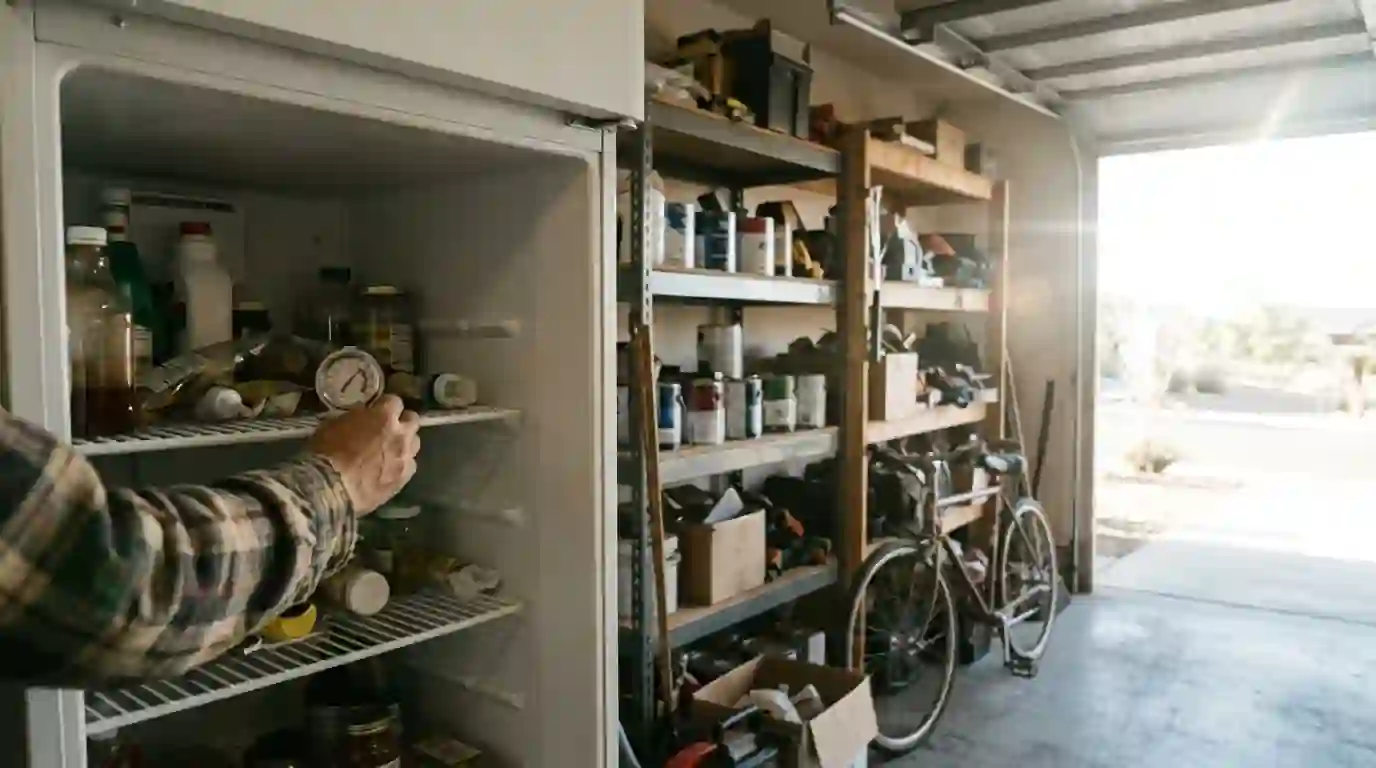
Most household refrigerators are designed to run in a room that stays within a moderate range. A closed garage in Northridge, Granada Hills or Sun Valley can climb well past the outdoor temperature on a 105°F afternoon. The sun heats the roof and the garage door, and there is little airflow to carry that heat away.
The refrigerator sheds heat into that hot air through its condenser coil. When the air around the coil is already very hot, the compressor runs longer and longer to keep up. Weak fans, worn start relays and tired door gaskets fail under that stress, often in the middle of a heat wave.
Check the climate rating before you blame the refrigerator
Many refrigerators list a climate class or an operating temperature range in the manual or on the rating label inside the cabinet. Some models are built to run in hotter rooms than others. A standard kitchen refrigerator moved to the garage may simply be working outside the range it was designed for.
If you are buying a refrigerator or freezer specifically for the garage, look for a model the manufacturer describes as garage ready or rated for higher room temperatures. For an existing unit, knowing the rating tells you whether summer trouble is a failing part or a machine asked to do more than it can. If you cannot find the label, the model number usually leads to the manual online.
Where to place a garage refrigerator for the best airflow
Placement makes a large difference in a hot garage. A refrigerator jammed into a corner between shelves, or pushed against a west-facing wall that bakes in the afternoon sun, has almost nothing to work with. A few feet of better placement can lower the load on the compressor noticeably.
Keep the unit plugged directly into a wall outlet rather than an extension cord. A long or thin cord can drop voltage, which is hard on the compressor's start circuit during hot afternoons. Plugging the refrigerator into the same circuit as a freezer, a power tool bench or a window air conditioner can also cause trouble. If the breaker trips often in summer, have the circuit looked at by an electrician.
- Leave several inches of space at the back, sides and top
- Keep it away from the water heater, dryer and furnace
- Avoid walls and windows that take direct afternoon sun
- Do not stack boxes or bags on top of the cabinet
- Set it level so the doors close and seal on their own

Spring checks that prepare a garage fridge for summer
The best time to help a garage refrigerator is before the first heat wave, not during it. Garages collect more dust, lint and debris than kitchens, especially in homes where the dryer and the refrigerator share the space. That dust settles straight onto the condenser coil.
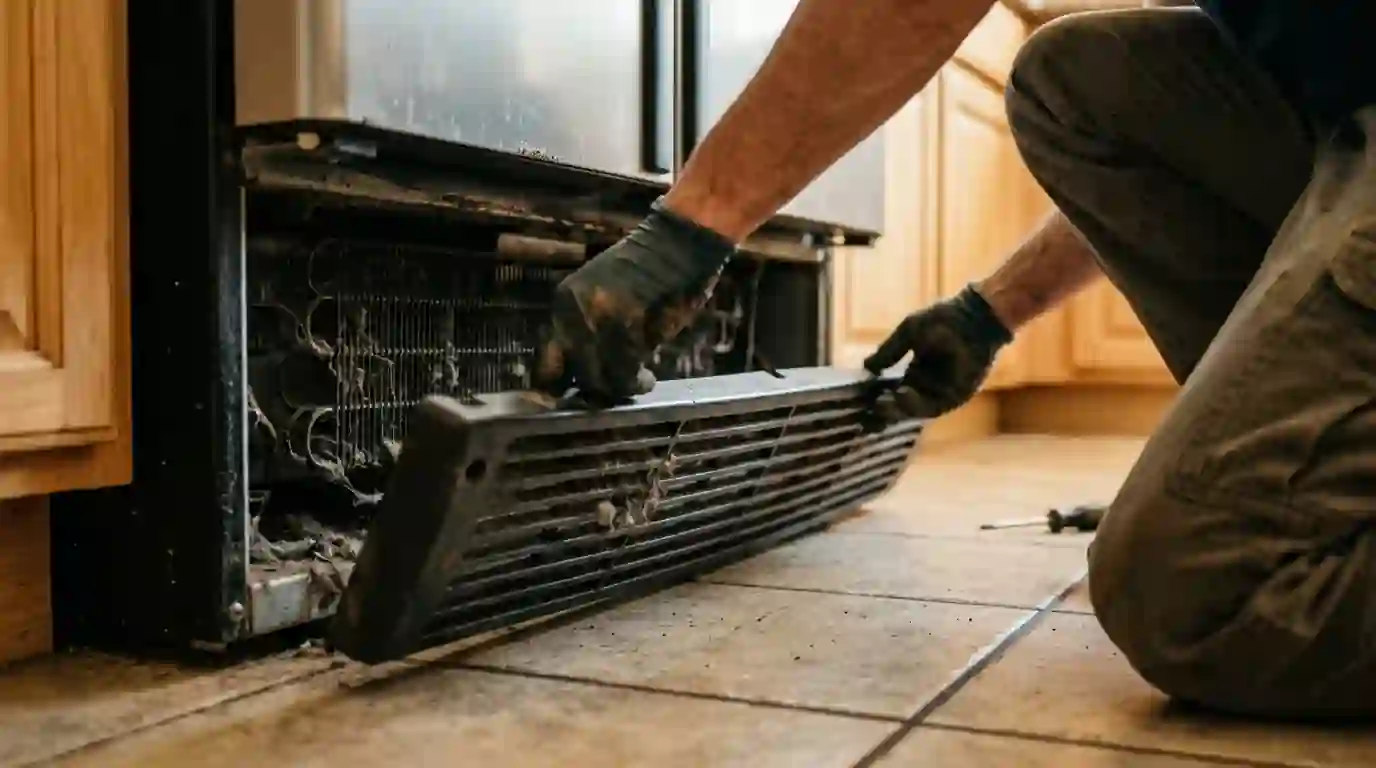
Unplug the refrigerator, pull it out carefully and clean the coils with a brush and vacuum. While it is out, look for lint on the condenser fan blades and listen to the fan once it is plugged back in. Wipe the door gaskets with warm soapy water and check them for tears or flattened sections. A gasket that no longer grips lets hot garage air leak in all day, which adds to the load on every part.
What to watch for on the hottest days
Put an appliance thermometer on the middle shelf and check it on hot afternoons. A reading that climbs above 40°F in the late afternoon and recovers overnight means the refrigerator is at its limit. A reading that stays high means a part has likely failed.
Listen too. A compressor that clicks on, hums briefly and shuts off again usually points to a start relay or overload problem. A refrigerator that runs nonstop with a warm cabinet points to a condenser fan, a dirty coil or low airflow.
- Fresh food above 40°F on hot afternoons
- Ice cream soft or frozen items sweating in the freezer
- Repeated clicking without the compressor running
- Frost building on the back wall of the freezer

How to load a garage refrigerator in hot weather
A reasonably full refrigerator holds its temperature better than an almost empty one. Cold drinks and stored food act as thermal mass, which helps the cabinet recover after the door opens. If the unit is mostly empty, a few jugs of water on the shelves can help it stay steady.
Limit trips to the garage refrigerator during the hottest part of the day, since each opening lets in a wave of hot air. Keep the most perishable food, such as meat, dairy and leftovers, in the kitchen refrigerator during heat waves. The garage unit is better suited to drinks and sealed items that tolerate small swings.
When to call about a garage refrigerator that cannot keep up
If the unit stays above 40°F after you have cleaned the coils, cleared space around it and checked the gaskets, it needs testing. Common causes are a slow condenser fan, a failing start relay, a defrost problem or a sealed system issue. These need proper parts and tools.
Our technician tests the fans, the start components and the defrost circuit, then gives you the price before any work starts. If the unit is older and was never built for garage heat, we will tell you honestly whether a repair makes sense. Call us any time if your garage refrigerator is losing the summer fight.
Key takeaways
- Closed Valley garages can run hotter than the outdoor temperature
- Check the climate rating on the label or in the manual
- Clean the coils and give the unit space before summer
- Keep it full and hold perishables in the kitchen fridge in heat waves