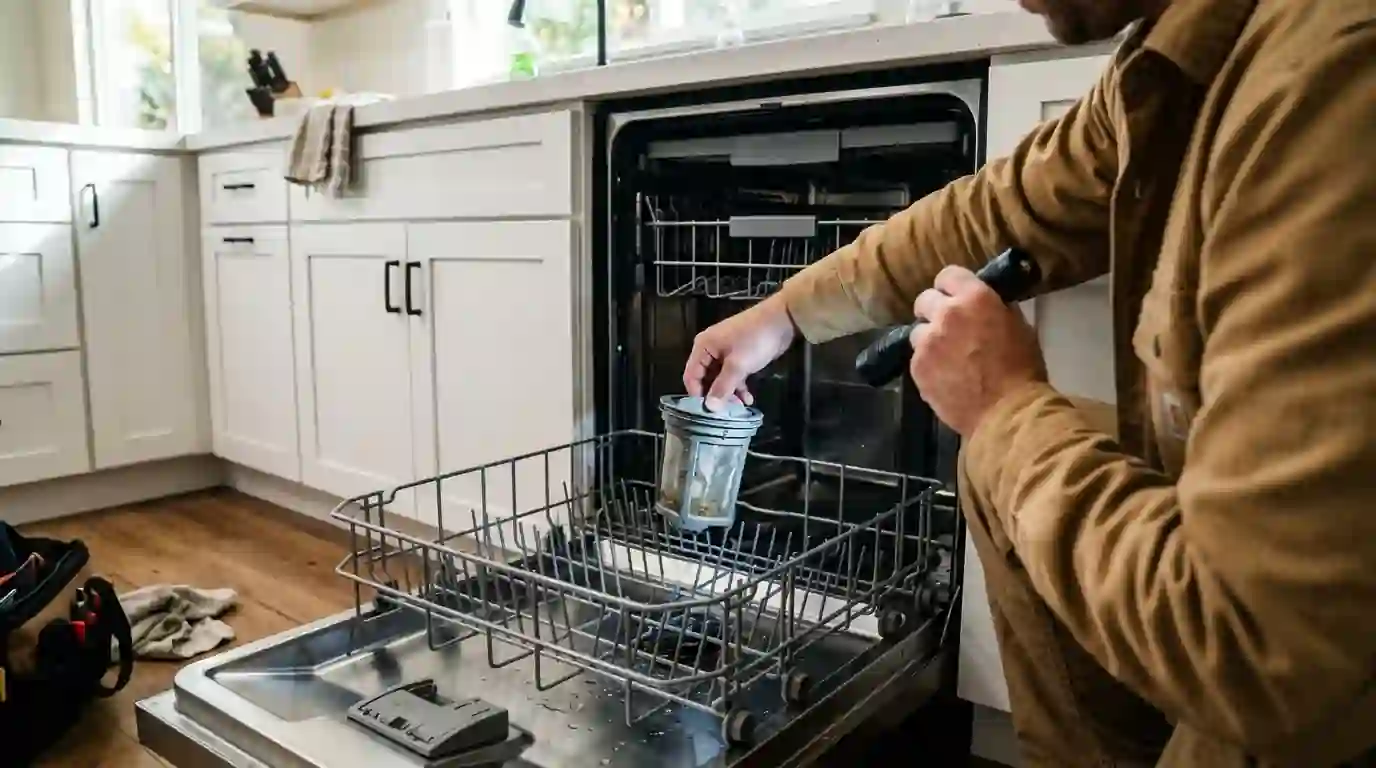
When a dishwasher will not drain, turn it off and unplug it or switch off its breaker first. Then clean the filter at the bottom of the tub, run the garbage disposal if you have one, check the air gap on the sink, and look for a kinked drain hose under the sink. If water still sits after those checks, the drain pump or a check valve has likely failed.
Make the dishwasher safe before you reach inside
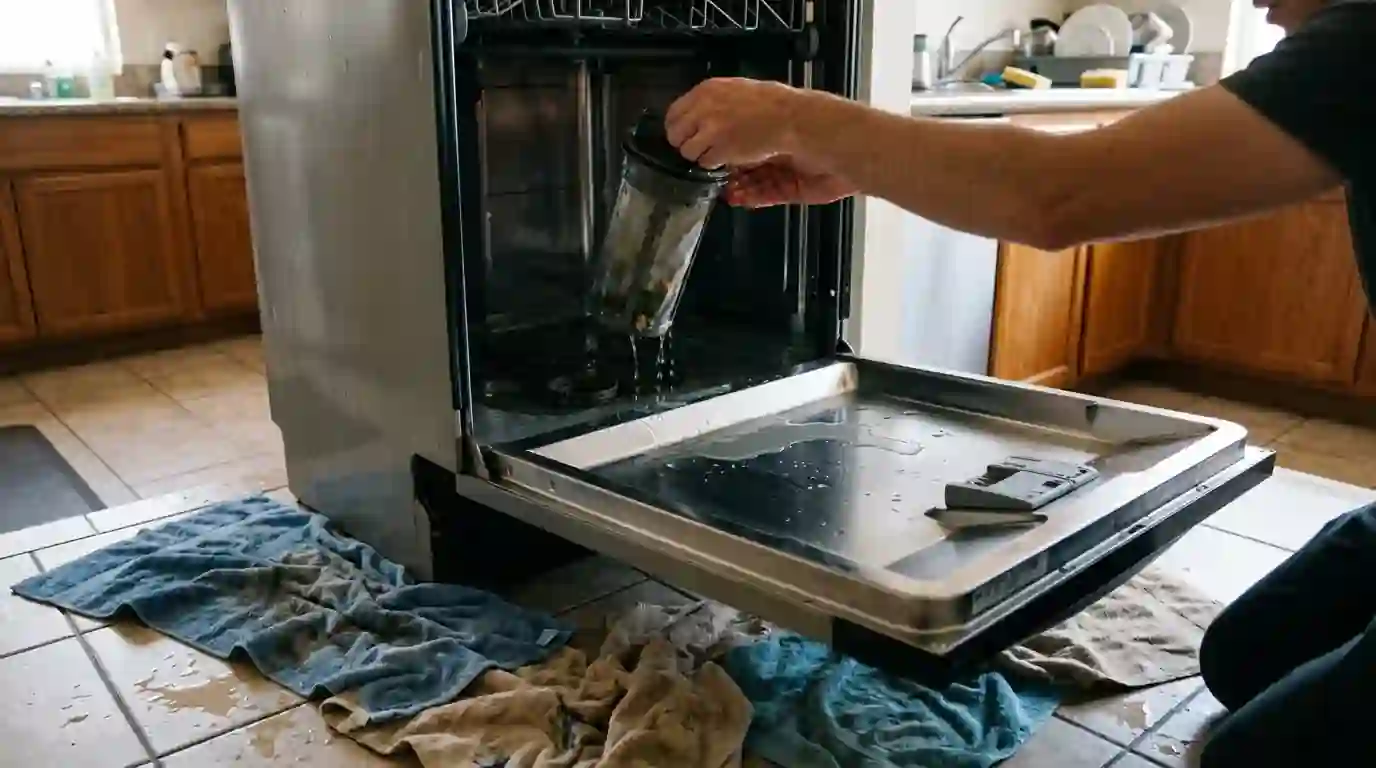
Turn the dishwasher off and cut its power before you put your hands in the tub. Most units plug into an outlet under the sink, while others are hardwired to a switch or a breaker. Either way, the power should be fully off while you work. You can also close the water supply valve under the sink so the dishwasher cannot add more water by mistake.
Bail out the standing water with a cup and then soak up the rest with towels. Keep a shallow pan and more towels nearby, since some water will spill when you remove the filter. If the water smells sour or looks greasy, that is a sign of food buildup rather than a failed part.
Clean the dishwasher filter, the most common clog
Most modern dishwashers have a removable filter in the floor of the tub, usually under the lower spray arm. It traps food, labels, glass shards and grease so they do not reach the pump. When it fills up, water drains slowly or not at all.
Twist and lift the cylindrical filter out, then remove any flat mesh screen under it. Rinse both under warm water and scrub with a soft brush and a little dish soap. Check the opening beneath for bits of glass, bone or fruit pits before you put everything back.
- Twist the filter counterclockwise and lift it out
- Rinse the fine mesh with warm water and a soft brush
- Look into the sump for glass, pits or labels
- Reseat the filter until it locks fully in place
Check the garbage disposal and its knockout plug
Many dishwashers drain through the garbage disposal. If the disposal is full of food or jammed, the dishwasher water has nowhere to go. Run the disposal with cold water for half a minute and then try a drain cycle.
If the disposal is newly installed, check that the knockout plug was removed. The disposal's dishwasher inlet has a plastic plug inside that must be knocked out during installation. When it is left in place, the dishwasher cannot drain at all. This is a common reason a brand-new disposal and an old dishwasher stop working together.
Clear the air gap and inspect the drain hose
Some kitchens have a small chrome or plastic cap on the sink deck next to the faucet. That is the air gap, and it keeps dirty sink water from siphoning back into the dishwasher. Lift off the cap, unscrew the inner cover and clean out any food or grease you find.
Then look under the sink at the drain hose. A hose crushed by cleaning supplies or kinked behind the cabinet will block flow. The hose should rise in a high loop before it connects to the disposal or drain, which keeps sink water from running back into the tub.
- Remove and clean the air gap cap on the sink deck
- Move items that press on the drain hose under the sink
- Look for sharp kinks where the hose enters the cabinet
- Confirm the hose has a high loop or connects through an air gap
Hard water, grease and the wrong detergent
Hard San Fernando Valley water leaves mineral scale in the sump and on the filter. Grease from pans then sticks to that scale and narrows the drain path. Over months, the combination can slow drainage even when the filter looks fairly clean.
Using regular dish soap in a dishwasher creates heavy foam that can overflow the tub and confuse the drain cycle. Too much dishwasher detergent can do something similar. Use only dishwasher detergent in the right amount, and run a dishwasher cleaner or a cup of white vinegar monthly to break down grease and scale. Scraping plates into the trash instead of rinsing heavy food into the dishwasher also keeps the sump clearer.
Signs the drain pump or check valve has failed
If the filter, disposal, air gap and hose are all clear and water still sits in the tub, the problem is likely inside the machine. The drain pump can fail electrically, or a piece of glass can jam its impeller. A stuck check valve can also block water from leaving the sump.
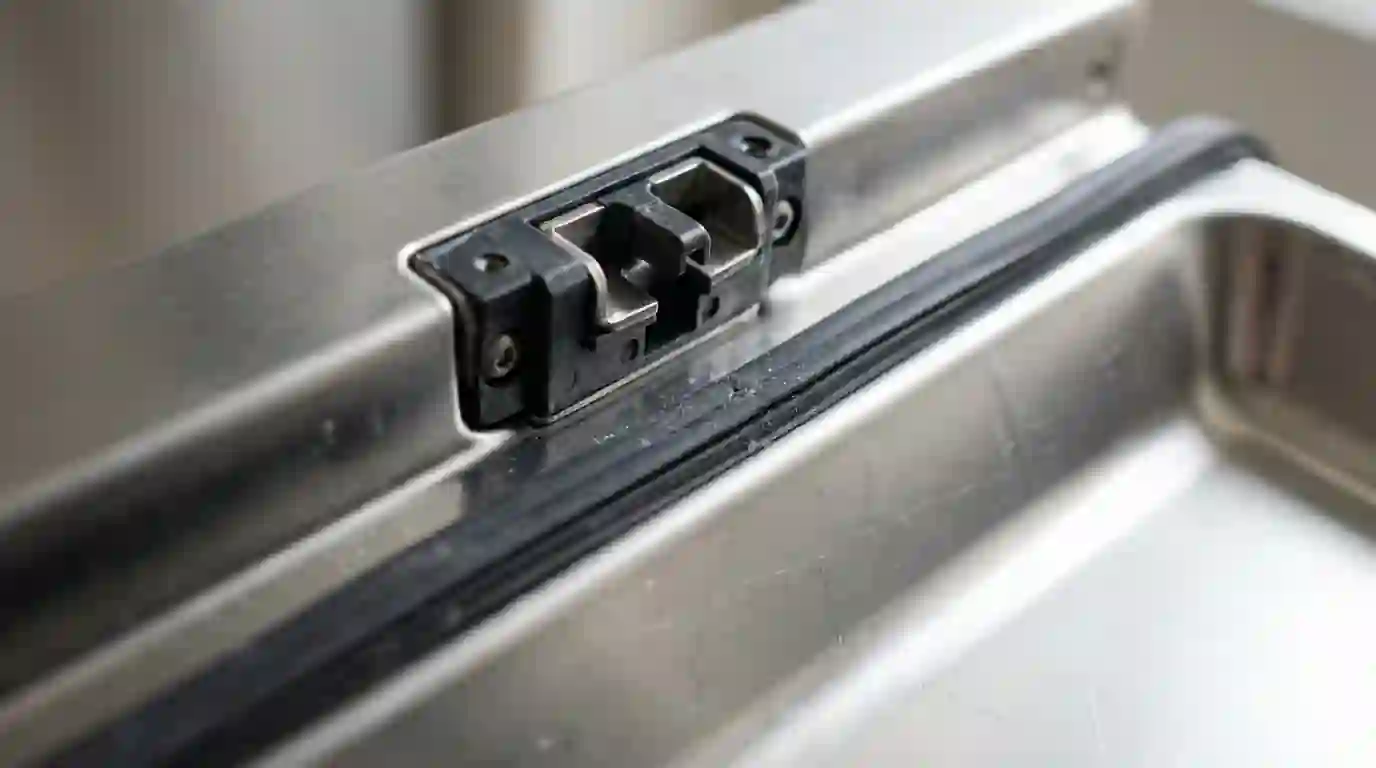
Listen during the drain part of the cycle. A humming sound with no water movement often means a jammed or failing pump. Glass shards from a broken drinking glass are a frequent culprit, since small pieces slip past a worn or loose filter. Silence can point to a pump that is not getting power, a bad control board signal or a door latch problem. Newer dishwashers often show a drain error code that narrows down the cause.
Getting a dishwasher drain problem fixed
Replacing a drain pump means pulling the dishwasher out from under the counter, disconnecting the water supply and power, and working underneath the tub. It is a job best handled with the water shut off and the correct replacement part. Doing it wrong can leave a slow leak under your cabinets.
Our technician tests the pump, the check valve and the control signal before replacing anything. You get the price before work begins, and we run a full test cycle to confirm the dishwasher drains completely. If your dishwasher still will not drain after these checks, call us and we will take it from there.
Key takeaways
- Cut the power before reaching into the dishwasher tub
- Clean the filter first, since it causes most drain problems
- Check the disposal, air gap and drain hose next
- Humming with no draining usually points to the drain pump