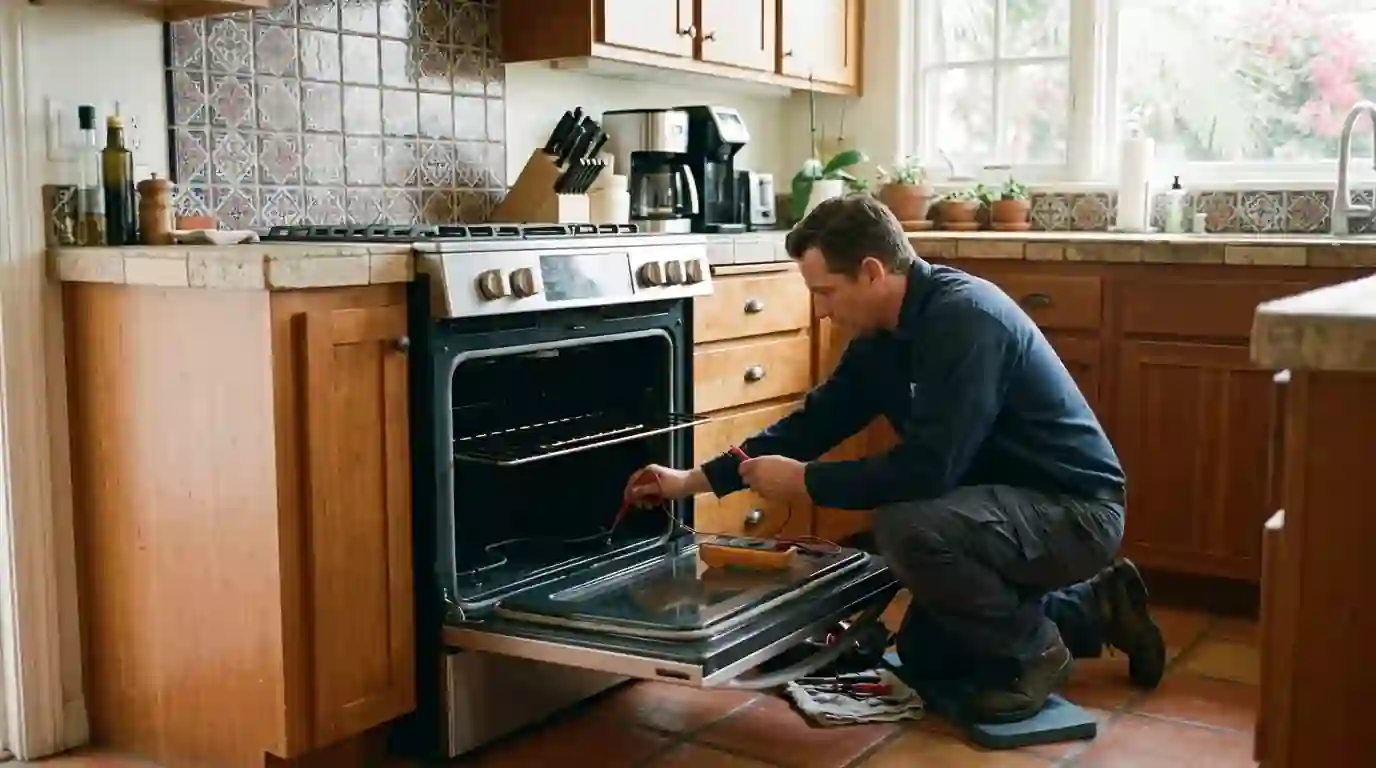
If you smell gas, leave the home now and call SoCalGas or 911 from outside. If there is no gas smell, check that the oven knob or control is set correctly, that the range is plugged in and that the breaker has not tripped. Most gas ovens that will not heat have a weak igniter. Do not adjust gas valves or igniters yourself.
If you smell gas, leave first and call from outside
Safety comes before any troubleshooting. If you smell gas, which is a strong rotten egg odor added to natural gas, leave the home right away with everyone inside. Do not turn lights or appliances on or off, do not use a phone indoors and do not try to find the leak.
Once you are outside and away from the building, call SoCalGas or 911. Do not go back in until you are told it is safe. Customers served by city utilities in Burbank, Glendale or Pasadena still get their gas from SoCalGas, so the same call applies. Only after the gas question is settled should anyone look at why the oven will not heat.
The only three checks a homeowner should make
With no gas smell, start with the simple items that do not involve gas parts at all. Most gas ovens need electricity to run the igniter and the controls, so a power problem looks exactly like an oven that will not heat. These checks are quick and need no tools.
Stop at these checks. Do not remove the oven floor to adjust the burner, do not touch the gas valve, and do not try to light the oven burner with a match. Those steps belong to a technician with the right tools.
- Burner knob or control: set to bake, a real temperature and not a timed delay
- Power cord: plugged firmly into the outlet behind the range
- Breaker: not tripped at the electrical panel
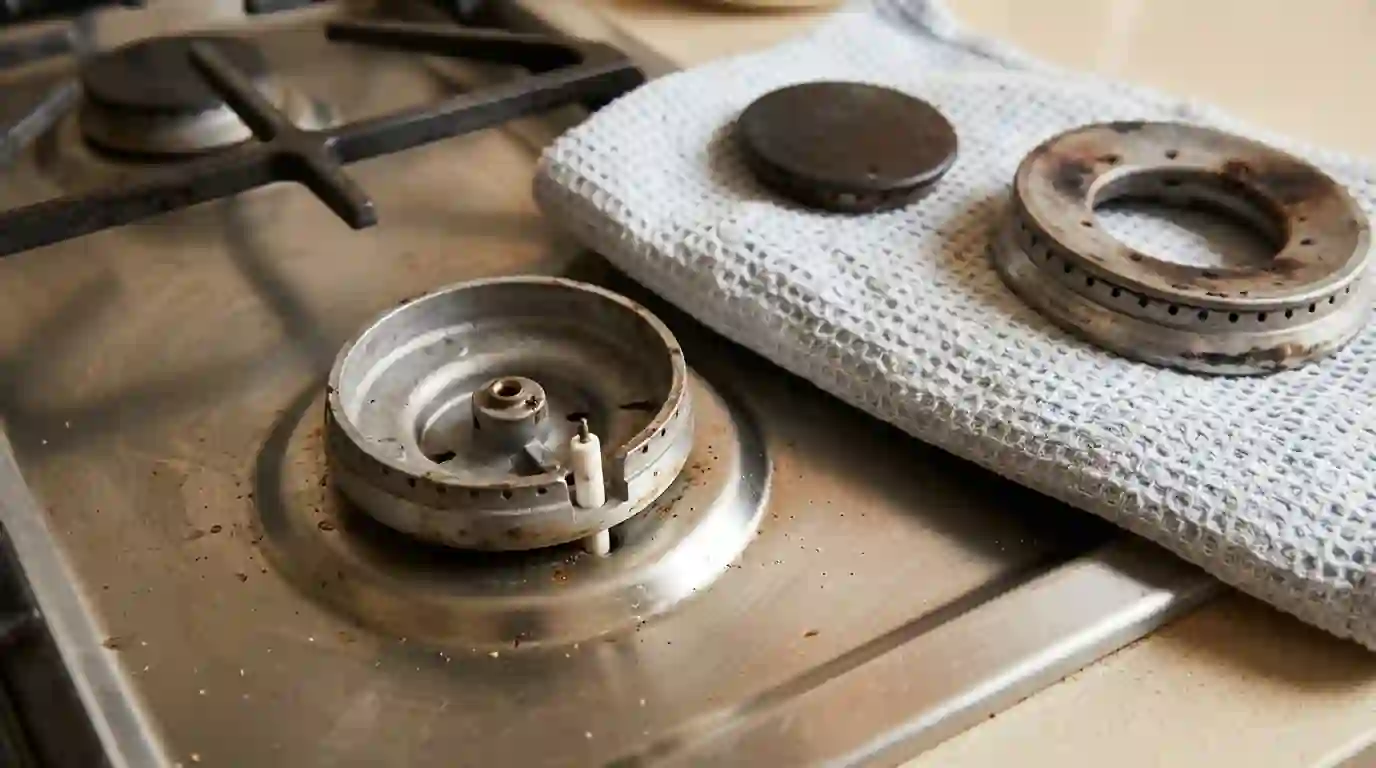
- Cooktop burners: light normally, which suggests gas is reaching the range
How a gas oven igniter works and why it weakens
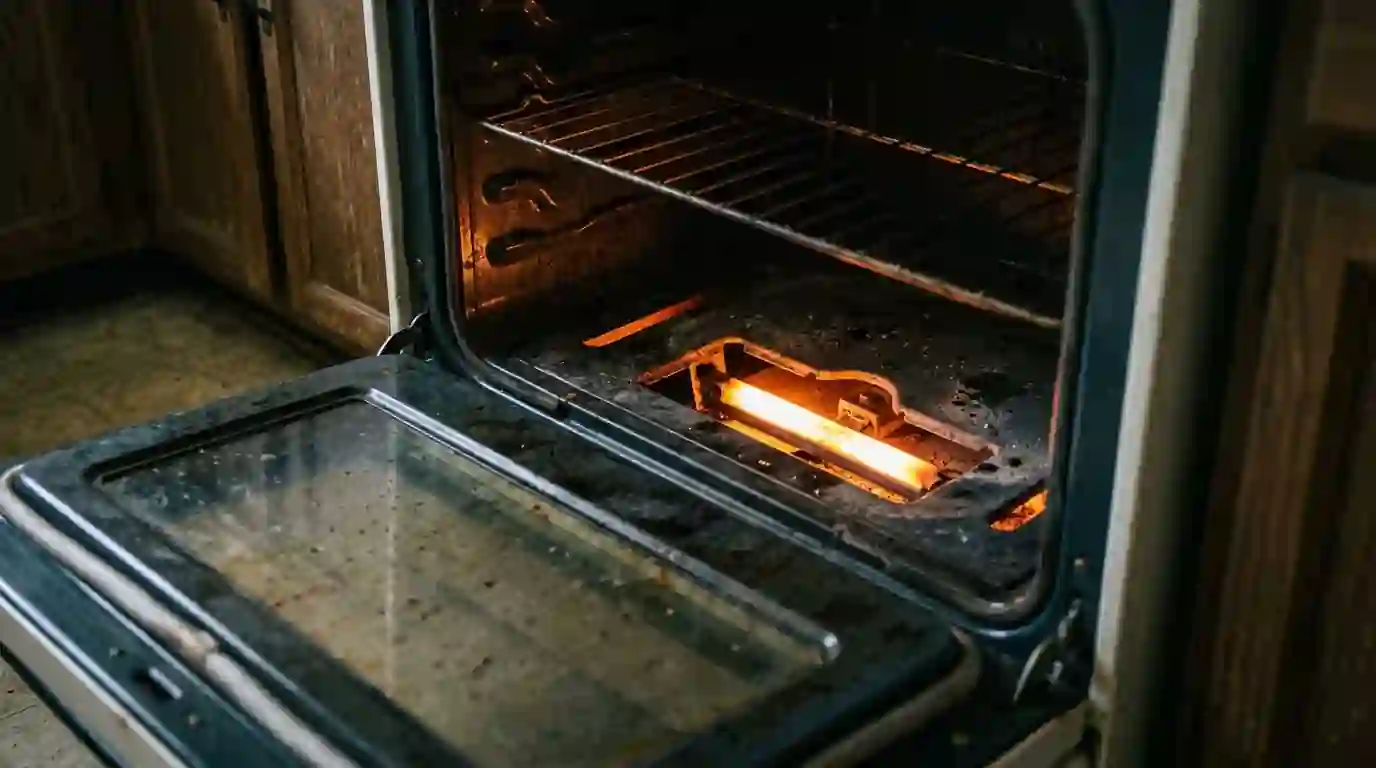
Most modern gas ovens use a hot surface igniter, a small part near the oven burner that glows bright orange when the oven calls for heat. The igniter draws current through the gas valve. Only when the igniter gets hot enough does the valve open and let gas flow to the burner.
As igniters age, they draw less current even though they still glow. The glow looks normal, but the valve never opens, so the burner never lights. That is why many people see an orange glow through the oven floor slot and still get no heat. Replacing the igniter is the most common gas oven repair we make.
Symptoms that point to a weak igniter
A failing igniter often gives warning before it quits. The oven may take much longer than usual to preheat, or it may heat on some days and not others. Some people notice a delay of a minute or more before they hear the burner catch.
These signs are useful to report on the phone, since they help us bring the right part. Note how long preheat takes now compared with before. Do not try to test or replace the igniter yourself, because the job means working with gas valve wiring inside the oven.
- Igniter glows but the burner never lights
- Preheat takes far longer than it used to
- A long delay before the burner catches
- The oven heats some days and not others
Other causes when the oven still will not heat
If the igniter is not the cause, a few other parts are usually responsible. The oven temperature sensor can fail and send the wrong reading to the control, so the oven never calls for heat or shuts off early. The electronic control board can lose the relay that powers the igniter circuit.
On older ranges and some pro-style models, the bake burner uses a spark module and a flame sensor instead of a glowing igniter. Those parts fail differently but leave the same result. Thermal fuses and safety valves can also open after a past overheat. Each of these needs testing with a meter, not a guess.
Pro-style gas ranges in remodeled Valley kitchens
Many remodeled kitchens in Encino, Studio City, Sherman Oaks and Calabasas have pro-style gas ranges from Wolf, Viking, Thermador or Bertazzoni. These ranges are heavy, often set on anti-tip brackets and sometimes recessed into tight cabinetry. Pulling one out without care can damage the floor or strain the gas connector.
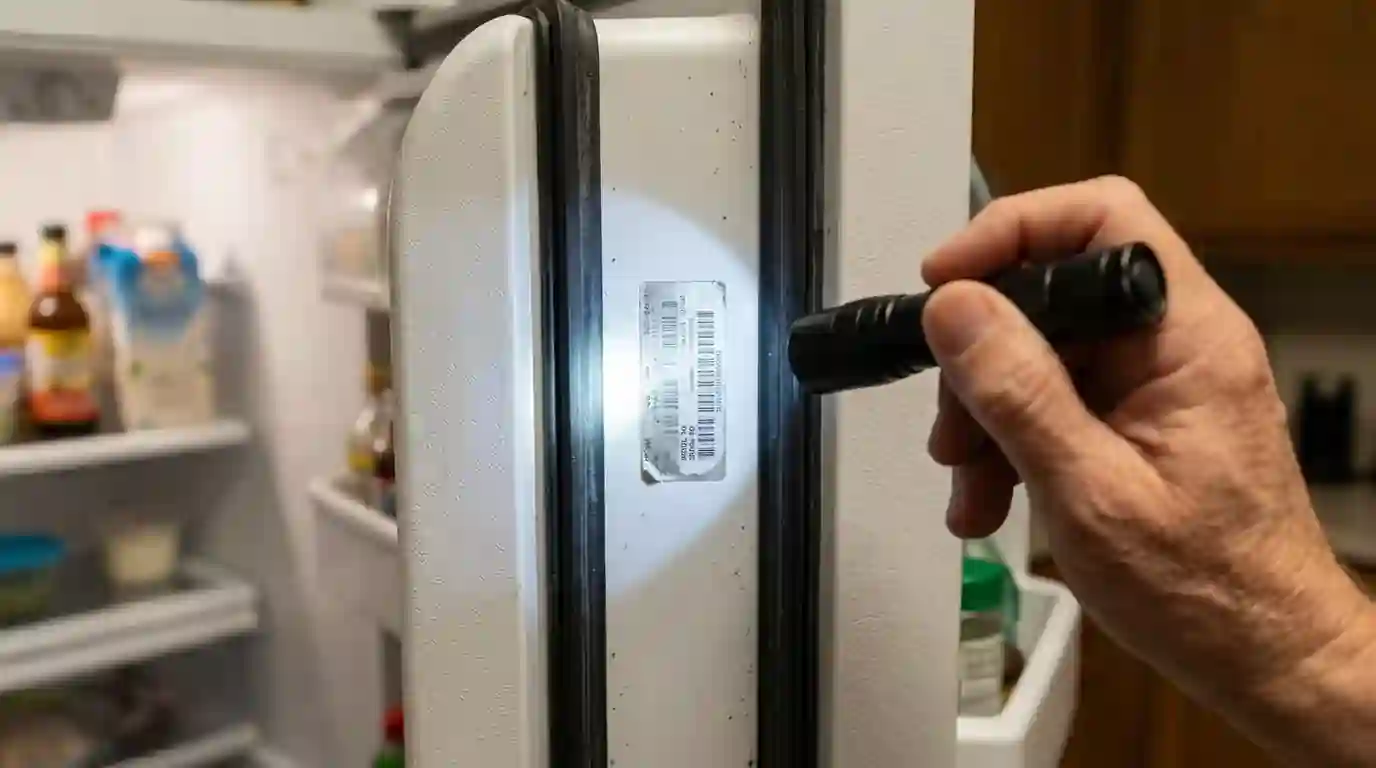
Their oven systems also differ from standard ranges. Some use dual-fuel designs with an electric oven, some use multiple burners and some use convection fans that affect heat. If you are not sure which type you have, the model number on the frame inside the door helps us bring the correct parts.
What happens when you call about a gas oven not heating
On the call, we ask what you see and hear: whether the igniter glows, whether the cooktop works and whether there is any gas smell. That helps us bring the most likely parts on the first visit. If there is any gas smell, we will tell you to leave and call SoCalGas or 911 first.
Our technician tests the igniter current, the sensor and the control signals, then checks the connections for leaks after any repair. You get the price before work begins. If your gas oven will not heat and there is no gas smell, call us any time and we will give you an arrival window.
Key takeaways
- Smell gas: leave the home and call SoCalGas or 911 from outside
- Check only the knob, the power cord and the breaker yourself
- A glowing igniter with no flame usually means a weak igniter
- Leave gas valves, igniters and burner adjustments to a technician