Make sure your range has an anti-tip bracket installed, strap tall refrigerators to the wall and confirm the water heater is strapped, which California requires. Use flexible connectors on gas appliances, leave a little slack in water lines and learn where your gas meter shutoff is. Only shut off the gas if you smell gas, hear a leak or see damage, and let SoCalGas restore it.
Why heavy appliances move during an earthquake
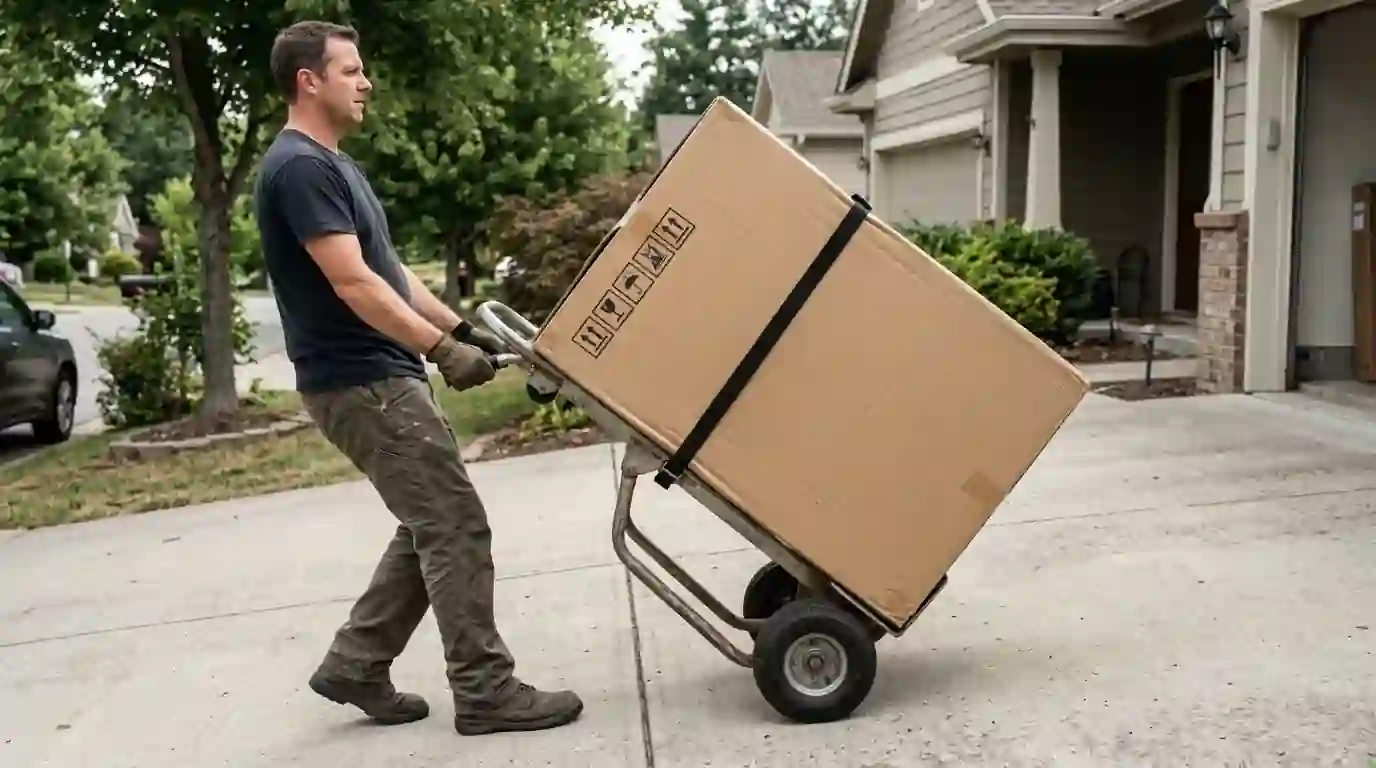
A refrigerator, range or front-load washer weighs a lot, but it rests on small feet or rollers. When the floor shakes, those appliances can walk across the floor, rock forward or tip over. Tall refrigerators are top-heavy, especially with the freezer on top, and they are often the first appliance to topple.
Movement also strains the lines behind each machine. A range that slides forward can pull on its gas connector. A washer that shifts can tear a supply hose. The 1994 Northridge earthquake led many Valley homes to be rebuilt or retrofit, but appliance restraints are easy to overlook even in updated homes.
Anti-tip brackets keep ranges from tipping forward
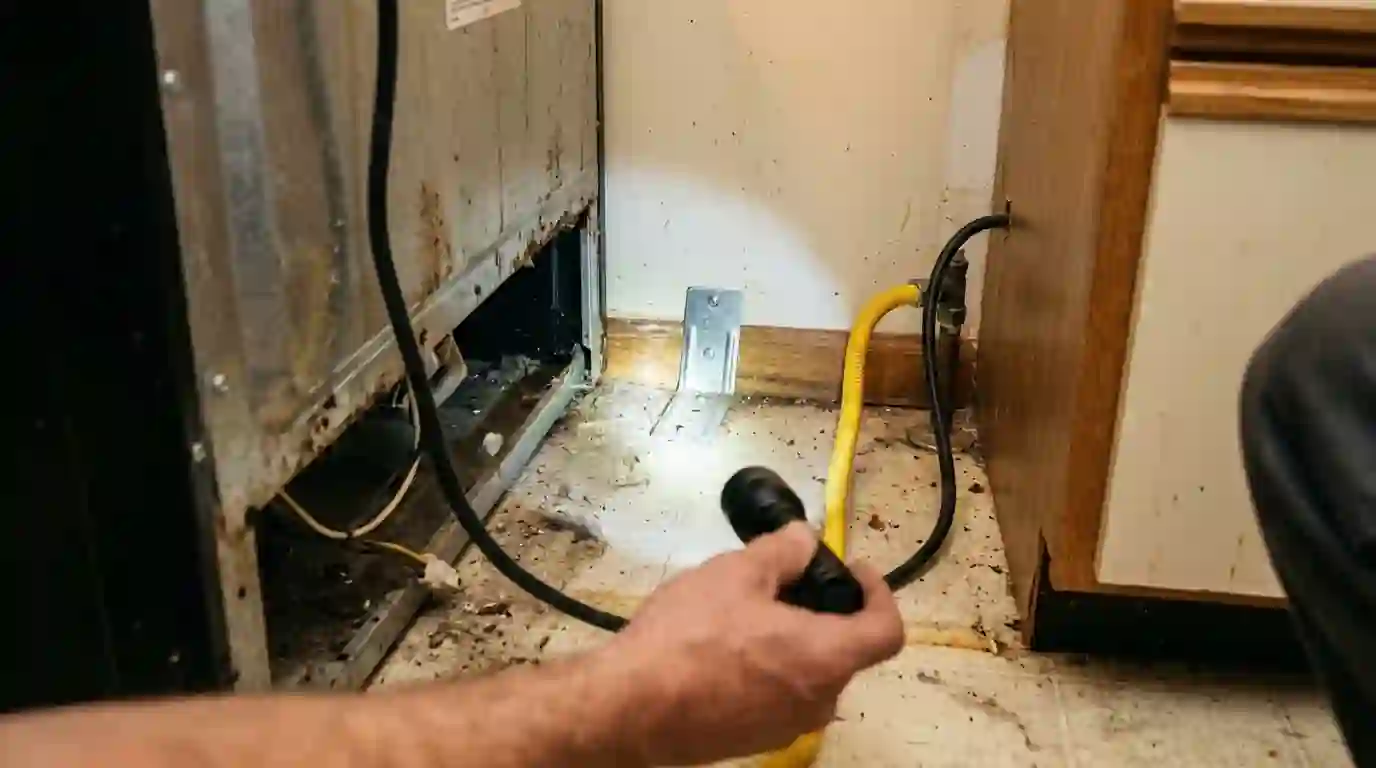
Freestanding and slide-in ranges are supposed to ship with an anti-tip bracket. The bracket fastens to the floor or the wall behind the range and catches one of the back legs. It stops the range from tipping forward if weight lands on the open oven door, and it also helps hold the range in place when the floor moves.
Brackets are often left off during a remodel or a range swap. To check, look for the bracket at a back corner with a flashlight, or gently tilt the range forward an inch while it is cool. A range that lifts freely has no working bracket. Replacement brackets are usually available for specific range models.
Straps for refrigerators and the water heater
Appliance straps anchor a tall refrigerator to wall studs behind it. They usually run across the back or the top of the cabinet and attach with lag screws into framing. Straps should leave room for the refrigerator to come forward for cleaning while stopping it from tipping out of its space.
California requires water heaters to be strapped against earthquake motion. Most installations use two metal straps around the tank, one in the upper third and one in the lower third, anchored to the wall framing. If your water heater straps look loose, rusted or missing, have them corrected by a plumber, since the water heater also connects to gas and water lines.
- Refrigerator: wall-anchored strap kit into studs, not drywall alone
- Water heater: upper and lower straps, required in California
- Freestanding freezer: strap or anchor if it is tall and narrow
- Stacked washer and dryer: confirm the stacking kit is fully installed
Flexible connectors and water lines with some slack
Gas ranges, dryers and water heaters should connect through flexible gas connectors rather than rigid pipe at the appliance. A flexible connector gives a little when the appliance shifts. Old, uncoated brass connectors or kinked lines should be replaced, and that work belongs to a qualified technician, not a homeowner.
Water lines need the same idea. Braided stainless steel washer hoses and refrigerator water lines with a gentle loop handle movement better than taut lines. Pushing an appliance tight against the wall removes that slack, so leave a few inches of space behind it.
Know where your gas shutoff is before you need it
Find your gas meter now, while things are calm. It is usually on the side or front of the house, and in apartment buildings there may be a bank of meters. The shutoff valve sits on the pipe next to the meter. Keep a wrench that fits the valve stored near the meter where you can reach it.
SoCalGas guidance is clear: only shut off the gas if you smell gas, hear gas escaping or see damage to the gas line. Shutting it off without a reason can leave your household without gas for days after a large quake. Once the gas is shut off at the meter, do not turn it back on yourself. SoCalGas must restore service and relight pilots.
- Find the meter and the shutoff valve on the pipe beside it
- Keep a wrench stored near the meter
- Shut off only if you smell gas, hear a leak or see damage
- Never turn the gas back on yourself, call SoCalGas
Quick steps for the hours after an earthquake
After the shaking stops, check for gas odor first. If you smell gas, leave the home and call SoCalGas or 911 from outside. Then look for water leaks behind the refrigerator, washer, dishwasher and water heater, and close the shutoff valve for any line that is leaking.
Check whether any appliance moved, tilted or pulled on its cord or lines. Do not restart an appliance that shifted a long way, has a damaged cord or sits in water. A refrigerator that slid but still runs normally can usually stay on while you wait to have it checked.
Getting your appliances checked and secured
When we install or service appliances, we check that range anti-tip brackets are in place and that gas and water connections have proper flexible lines. We also point out appliances that sit too tight against the wall or need a strap. Many of these fixes take only a few minutes during a regular visit.
After a quake, our technician can inspect appliances that moved, test them and replace damaged cords, hoses or connectors, with the price given before any work starts. Gas meter service and relighting after a shutoff belong to SoCalGas. If you want your kitchen and laundry appliances checked for earthquake readiness, call us any time.
Key takeaways
- Confirm the range has a working anti-tip bracket
- Strap tall refrigerators, and keep the water heater strapped as required
- Use flexible connectors and leave slack in water lines
- Shut off gas only for a smell, a leak sound or damage